In today’s competitive marketplace, customer relationships determine whether a small business thrives or struggles. While attracting new customers remains important, retaining existing customers and building long-term relationships often generates significantly higher profits.
This is where Customer Relationship Management (CRM) software becomes essential.
The best CRM software for small business growth helps companies organize customer data, automate sales processes, improve communication, increase conversions, and enhance customer satisfaction. Whether you’re a startup, local business, consulting agency, e-commerce store, or service provider, implementing the right CRM solution can dramatically improve operational efficiency and revenue growth.
This comprehensive guide explores everything small business owners need to know about CRM software, including features, benefits, pricing considerations, implementation strategies, and the top CRM platforms available today.
What Is CRM Software?
CRM (Customer Relationship Management) software is a digital platform that helps businesses manage interactions with current and potential customers.
Instead of storing customer information in spreadsheets, emails, or notebooks, CRM software centralizes everything into one system.
A CRM platform typically stores:
- Contact information
- Communication history
- Sales opportunities
- Purchase records
- Customer support tickets
- Marketing activities
- Follow-up schedules
- Sales pipeline data
This centralized approach helps teams work more efficiently while delivering better customer experiences.
Why Small Businesses Need CRM Software
Many small business owners initially manage customer relationships manually. However, as customer numbers grow, managing interactions becomes increasingly difficult.
Common challenges include:
- Missed follow-ups
- Lost sales opportunities
- Poor customer communication
- Inconsistent service quality
- Lack of sales visibility
- Inefficient workflows
CRM software solves these problems by creating a structured and scalable customer management system.
Benefits include:
Improved Customer Retention
Businesses can track customer interactions and maintain consistent communication.
Higher Sales Conversion Rates
Sales teams can prioritize leads and focus on opportunities most likely to convert.
Better Team Collaboration
Everyone accesses the same customer information in real time.
Increased Productivity
Automation reduces repetitive administrative tasks.
Enhanced Customer Experience
Personalized interactions build trust and loyalty.
Key Features to Look for in CRM Software
Not all CRM systems are created equal. Small businesses should prioritize features that directly support growth.
Contact Management
A strong CRM stores and organizes customer information efficiently.
Essential capabilities include:
- Customer profiles
- Contact segmentation
- Activity tracking
- Communication history
Sales Pipeline Management
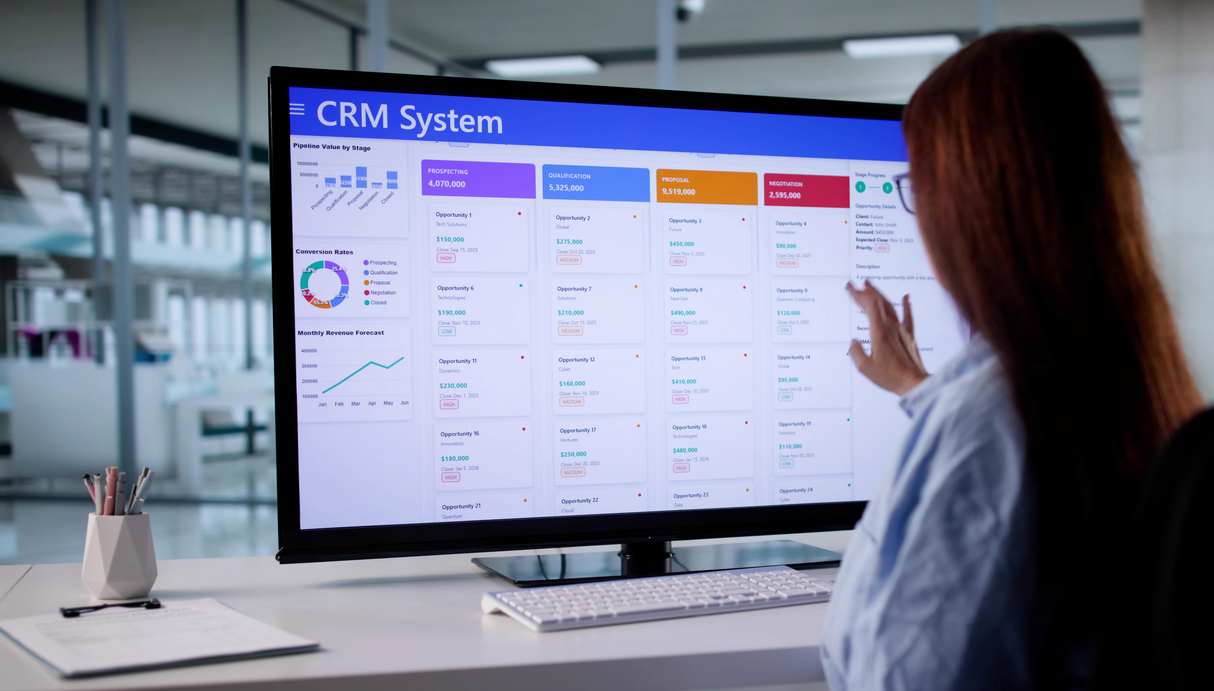
Pipeline visualization helps sales teams track opportunities from initial contact to final purchase.
Key benefits:
- Opportunity tracking
- Revenue forecasting
- Sales performance monitoring
- Conversion optimization
Marketing Automation
Modern CRM systems often include marketing tools such as:
- Email campaigns
- Lead nurturing
- Automated workflows
- Customer segmentation
Reporting and Analytics
Data-driven decisions are critical for growth.
Look for:
- Sales reports
- Lead reports
- Customer behavior analysis
- Revenue forecasting
Mobile Accessibility
Business owners increasingly work remotely.
A quality CRM should provide:
- Mobile applications
- Cloud synchronization
- Real-time updates
- Offline access

Top Benefits of CRM Software for Small Business Growth
1. Increased Revenue
CRM platforms help businesses identify opportunities, nurture leads, and close more deals.
Organizations that effectively use CRM systems often experience significant sales improvements due to better visibility and automation.
2. Better Customer Relationships
Personalized communication creates stronger customer loyalty.
Businesses can remember:
- Customer preferences
- Purchase history
- Previous conversations
- Support interactions
3. Enhanced Lead Management
CRM software enables businesses to:
- Capture leads automatically
- Score prospects
- Prioritize opportunities
- Track conversion stages
4. Improved Customer Support
Customer service teams gain immediate access to customer information.
This results in:
- Faster resolutions
- Better satisfaction rates
- Reduced support costs
5. Greater Operational Efficiency
Automation reduces manual work.
Examples include:
- Email scheduling
- Task reminders
- Follow-up sequences
- Lead assignment
Best CRM Software Categories for Small Businesses
All-in-One CRM Platforms
These systems provide:
- Sales tools
- Marketing automation
- Customer support
- Analytics
Ideal for businesses seeking a complete solution.
Sales-Focused CRM Solutions
Designed primarily for:
- Lead management
- Deal tracking
- Pipeline visibility
- Sales forecasting
Perfect for growing sales teams.
Marketing-Centric CRM Systems
Focus on:
- Email marketing
- Customer segmentation
- Campaign automation
- Lead nurturing
Suitable for digital marketing strategies.
Customer Service CRM Platforms
Prioritize:
- Ticket management
- Knowledge bases
- Live chat
- Customer support analytics
Great for service-oriented companies.
Essential CRM Automation Features
Automation significantly increases business efficiency.
Popular CRM automations include:
Automated Follow-Ups
No prospect is forgotten.
Lead Assignment
New leads automatically reach the correct salesperson.
Email Sequences
Customers receive relevant information at the right time.
Task Reminders
Critical activities remain on schedule.
Workflow Automation
Complex business processes run automatically.
CRM and Sales Growth
Sales growth is one of the primary reasons businesses adopt CRM technology.
A CRM improves sales by:
- Tracking opportunities
- Managing pipelines
- Forecasting revenue
- Automating follow-ups
- Identifying bottlenecks
Sales teams gain visibility into every stage of the customer journey.
CRM for Customer Retention
Acquiring a new customer generally costs more than retaining an existing one.
CRM software supports retention through:
- Personalized communication
- Loyalty programs
- Customer support tracking
- Automated engagement campaigns
Long-term customer relationships create sustainable business growth.
Cloud-Based CRM vs On-Premise CRM
Cloud CRM
Advantages:
- Lower upfront costs
- Easy implementation
- Remote access
- Automatic updates
Most small businesses prefer cloud solutions.
On-Premise CRM
Advantages:
- Greater control
- Custom infrastructure
- Internal data management
Usually suitable for larger organizations with dedicated IT teams.
CRM Integration Capabilities
Modern businesses use multiple software platforms.
The best CRM software integrates with:
- Email platforms
- Accounting software
- E-commerce systems
- Marketing tools
- Payment gateways
- Customer support systems
Integration eliminates data silos and improves productivity.
Common CRM Implementation Mistakes
Avoid these common mistakes:
Choosing Based Only on Price
Cheap solutions may lack essential features.
Ignoring User Adoption
Employees must receive proper training.
Poor Data Quality
Incorrect information reduces CRM effectiveness.
Lack of Defined Processes
Businesses should establish workflows before implementation.
Overcomplicating the System
Start simple and expand gradually.
How to Select the Best CRM Software
Follow these steps:
Step 1: Identify Business Goals
Determine whether your priority is:
- Sales growth
- Customer retention
- Marketing automation
- Customer support
Step 2: Define Your Budget
Include:
- Subscription costs
- Setup expenses
- Training costs
Step 3: Evaluate Features
Compare platforms based on actual business requirements.
Step 4: Test Free Trials
Hands-on experience reveals usability issues.
Step 5: Consider Scalability
Choose software that can grow with your business.
CRM Trends Shaping the Future
Artificial Intelligence
AI-powered CRM tools can:
- Predict customer behavior
- Score leads
- Recommend actions
- Automate communication
Predictive Analytics
Businesses can forecast customer needs before problems occur.
Hyper-Personalization
Advanced CRM platforms create individualized customer experiences.
Voice and Conversational CRM
Voice assistants and chatbots improve efficiency.
Advanced Automation
Routine tasks continue to become increasingly automated.
ROI of CRM Software
A properly implemented CRM system often delivers measurable returns through:
- Increased sales
- Better retention
- Reduced operational costs
- Improved productivity
- Enhanced customer satisfaction
Businesses frequently find that CRM software becomes one of their highest-return technology investments.

Final Thoughts
Finding the best CRM software for small business growth is not simply about choosing the most popular platform. The right solution depends on your company’s goals, sales processes, customer base, and growth strategy.
An effective CRM system helps businesses centralize customer information, automate repetitive tasks, improve communication, enhance customer experiences, and increase revenue. As competition continues to intensify, CRM technology is becoming a necessity rather than a luxury.
Small businesses that invest in CRM software today position themselves for stronger customer relationships, greater efficiency, and sustainable long-term growth.
FAQ
What is the best CRM software for small business growth?
The best CRM software for small business growth is one that aligns with your sales process, customer management needs, automation requirements, and budget.
Is CRM software worth it for small businesses?
Yes. CRM software helps increase efficiency, improve customer retention, and boost sales performance.
How much does CRM software cost?
Pricing ranges from free plans to enterprise-level subscriptions costing hundreds of dollars per month.
Can CRM software improve customer retention?
Absolutely. CRM systems enable personalized communication, better support, and stronger customer engagement.
Do small businesses need cloud CRM software?
For most small businesses, cloud CRM solutions offer flexibility, affordability, and ease of implementation.